


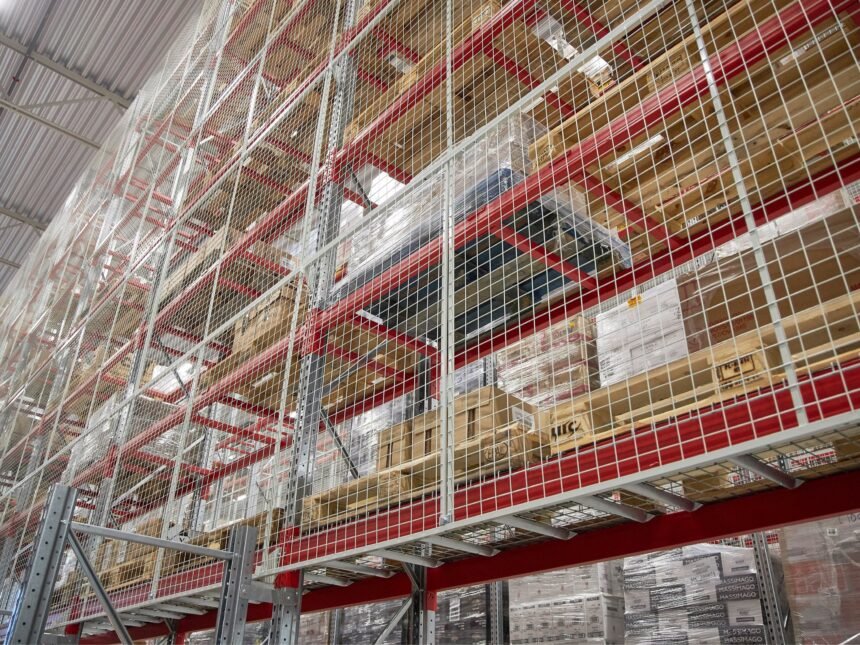
Storage demands rarely stay the same for long. Product lines change, pallet sizes vary, and stock volumes rise and fall throughout the year. For many UK warehouses, flexibility is essential. This is where adjustable pallet racking continues to prove its value.
Unlike fixed storage systems, adjustable racking allows beam levels to be repositioned to suit different pallet heights and load requirements. It is widely used across retail distribution centres, manufacturing facilities, and third party logistics operations.
- How Adjustable Pallet Racking Supports Changing Stock Profiles
- Improving Space Efficiency
- Compatibility With Forklift Operations
- Safety Considerations During Reconfiguration
- Supporting Business Growth
- Integration With Mezzanine Floors and Multi Tier Systems
- Maintenance and Inspection Requirements
- Environmental and Cost Benefits
- Conclusion
How Adjustable Pallet Racking Supports Changing Stock Profiles
Modern warehouses rely on adaptable storage systems to handle evolving inventory. Adjustable Pallet Racking is designed so that horizontal beams can be moved vertically along uprights at set intervals. This allows operators to change shelf heights without replacing the entire structure.
This flexibility supports:
- Seasonal stock fluctuations
- Mixed pallet heights
- Changes in packaging dimensions
- Introduction of new product lines
- Shifts in storage density requirements
Instead of investing in new systems every time product specifications change, warehouse managers can reconfigure existing racking to match operational needs.
Improving Space Efficiency
Floor space is expensive. Industrial units across the UK continue to increase in cost, particularly in high demand regions. Making the best possible use of vertical space is critical.

Adjustable pallet racking allows warehouses to maximise height safely. Beam levels can be set precisely to minimise wasted air space between pallets. Over time, this leads to improved storage density without expanding premises.
However, reconfiguration should always consider safe load limits. Each beam level and upright frame has a specified capacity. Adjustments must be carried out in line with manufacturer guidance.
Compatibility With Forklift Operations
One reason adjustable racking is so widely used is its compatibility with standard forklift trucks. Counterbalance and reach trucks can access individual pallets directly. This makes it suitable for operations where stock rotation and fast picking are important.
Direct access to every pallet reduces handling time. There is no need to move multiple loads to reach stock at the back of a lane. This is particularly valuable in facilities handling varied product ranges.
Safety Considerations During Reconfiguration
Although adjustable pallet racking offers flexibility, changes should not be made casually. Altering beam positions can affect load distribution and overall structural stability.
Before reconfiguring racking, warehouse operators should:
- Review load capacity charts
- Confirm pallet weights
- Check floor anchoring
- Inspect uprights for existing damage
- Update load notices where necessary
If changes are significant, consulting experienced design and installation professionals is advisable. This ensures compliance with SEMA guidance and Health and Safety Executive expectations.
Supporting Business Growth
Growing businesses often face storage challenges. Increased order volumes can strain existing layouts. Adjustable racking provides a scalable solution.
Additional bays can be added alongside existing rows. Beam levels can be adjusted to accommodate bulkier products. This avoids the need for immediate relocation to larger premises.
For expanding UK companies, this flexibility reduces capital expenditure and keeps disruption to a minimum.
Integration With Mezzanine Floors and Multi Tier Systems
Adjustable pallet racking can also form part of more complex warehouse layouts. In some facilities, it is installed beneath mezzanine floors to create layered storage areas. In others, it integrates with picking zones and dispatch areas.
Because beam levels are movable, the system adapts to operational redesigns over time. This makes it a practical choice for businesses refining workflows.
Maintenance and Inspection Requirements
Like all storage systems, adjustable racking must be inspected regularly. Weekly visual checks by trained staff help identify impact damage early. Annual expert inspections provide a more detailed assessment.
Common issues include:
- Bent uprights from forklift contact
- Missing safety pins
- Damaged beams
- Loose floor anchors
Addressing minor damage quickly prevents more serious structural problems later.
Environmental and Cost Benefits
Extending the lifespan of a storage system reduces material waste and replacement costs. Adjustable pallet racking supports this by allowing reconfiguration rather than replacement.
In addition, steel components can often be reused when layouts change. This contributes to more sustainable warehouse practices.
Conclusion
Adjustable pallet racking remains one of the most practical and flexible storage solutions available to UK warehouses. Its ability to adapt to changing stock requirements, support efficient forklift access, and maximise vertical space makes it a reliable choice across multiple industries.
When installed and maintained correctly, it offers long term value and operational efficiency. For businesses seeking a storage system that can evolve alongside growth and changing demands, adjustable pallet racking continues to deliver dependable performance.