


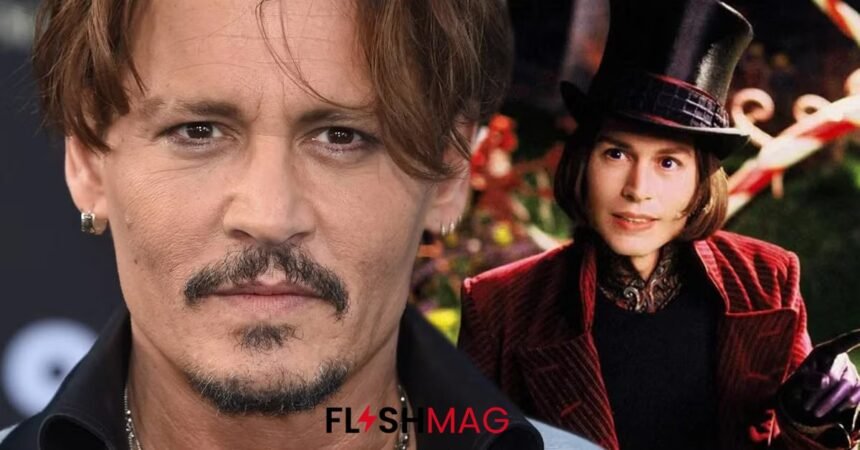
Some movie performances are instantly embraced, while others spend years sparking debates among audiences. The portrayal of Willy Wonka by Johnny Depp definitely falls into the second category. Even now, long after the film’s release, conversations about his interpretation continue to appear across fan communities, movie forums, and social media discussions.
- The Legacy of Willy Wonka Before Johnny Depp
- Johnny Depp Willy Wonka and Tim Burton’s Vision
- Why Many Fans Love Johnny Depp’s Performance
- What Critics Question About Johnny Depp Willy Wonka
- Comparing Depp and Wilder Without Declaring a Winner
- How Younger Audiences Responded
- The Influence of Tim Burton and Johnny Depp’s Collaboration
- The Lasting Cultural Impact
- Why Opinions May Continue to Evolve
- Conclusion
- FAQs
For many viewers, childhood memories are closely tied to Willy Wonka. Whether they grew up watching the classic 1971 adaptation or discovered the story through later versions, the character carries a certain sense of magic. So when a beloved fictional chocolatier is reimagined by one of Hollywood’s most recognizable actors, opinions are bound to vary.
The discussion surrounding Johnny Depp Willy Wonka is fascinating because it isn’t simply about whether people liked the movie. It reflects broader questions about nostalgia, artistic risks, and what audiences expect when an iconic character gets a fresh face.
The Legacy of Willy Wonka Before Johnny Depp
Before examining Depp’s portrayal, it helps to understand the enormous shadow cast by earlier interpretations.
Willy Wonka first appeared in the imagination of author Roald Dahl through his beloved novel Charlie and the Chocolate Factory. Readers met an eccentric inventor who possessed intelligence, humor, mystery, and perhaps a little bit of sadness hidden beneath his playful exterior.
For decades, many people associated the character almost exclusively with Gene Wilder’s performance in the 1971 film adaptation.
Wilder created a version of Wonka that felt warm yet unpredictable. He smiled often but always seemed to be hiding secrets. Viewers never knew whether he was joking, testing people, or quietly judging them.
That portrayal became deeply embedded in popular culture.
Naturally, any actor stepping into the role years later would face comparisons.
Johnny Depp understood that challenge.
Instead of copying Wilder, he chose another path entirely.
Johnny Depp Willy Wonka and Tim Burton’s Vision
A Different Direction from the Beginning
The 2005 adaptation directed by Tim Burton wasn’t intended to recreate the earlier movie scene by scene.
Burton wanted a visual world that felt closer to Dahl’s original imagination. The chocolate factory appeared larger, stranger, and more dreamlike.
Johnny Depp’s Wonka reflected that artistic decision.
Rather than presenting a charming showman, Depp portrayed Wonka as socially awkward, emotionally distant, and somewhat childlike.
His pale complexion, unusual hairstyle, soft-spoken voice, and stiff body language immediately signaled that audiences were meeting someone very different.
Some viewers appreciated the boldness.
Others were surprised, perhaps even uncomfortable.
But maybe that was partly the point.
Burton’s films have rarely aimed for universal comfort.
Influences Behind the Character
Johnny Depp reportedly drew inspiration from various personalities and cultural figures while developing Wonka.
Some fans noticed similarities to certain television hosts, fashion icons, or entertainers known for their eccentric public images.
The result was a version of Wonka that felt less like a magician and more like an isolated genius who had spent decades avoiding normal human interaction.
It was unusual.
It was risky.
And depending on whom you ask, it was either brilliant or deeply misguided.
Why Many Fans Love Johnny Depp’s Performance
He Avoided Imitation
Perhaps the biggest compliment supporters give Depp is that he never tried to imitate Gene Wilder.
That would have been the safer option.
Audiences often criticize actors who simply mimic previous performances without adding anything original.
Depp chose authenticity over imitation.
Whether people loved his interpretation or not, they generally recognized that he committed fully to his creative choices.
That kind of artistic confidence deserves some respect.
The Character Felt More Complex
Supporters argue that Depp introduced emotional depth to Wonka.
The film explores his difficult childhood and strained relationship with his father.
These backstory elements suggest that Wonka’s odd behavior isn’t random.
He struggles with trust.
He feels uncomfortable expressing emotions.
He avoids meaningful connections.
Viewed through that lens, his awkward interactions become more understandable.
For some audiences, this made the character feel more human.
Instead of being merely mysterious, he became someone carrying unresolved emotional wounds.
Depp’s Chemistry with Young Actors
Another aspect fans appreciate is Depp’s dynamic with Charlie.
At first, Wonka seems detached and self-absorbed.
Gradually, Charlie’s kindness challenges his worldview.
Their relationship evolves naturally throughout the story.
Many viewers found those scenes surprisingly touching.
Wonka isn’t teaching Charlie important lessons.
In some ways, Charlie is helping Wonka rediscover simple family values.
That reversal appealed to many people.
Visual Creativity Enhanced the Performance
Tim Burton’s visual style undoubtedly supported Depp’s portrayal.
The colorful factory environments complemented Wonka’s unusual personality.
The candy inventions, imaginative sets, and whimsical costumes helped establish a world where Depp’s eccentric behavior felt believable.
Inside an ordinary setting, his performance might have appeared excessively strange.
Inside Burton’s fantasy landscape, it fit more comfortably.
What Critics Question About Johnny Depp Willy Wonka
Was the Character Too Detached?
One of the most common criticisms concerns emotional accessibility.
Gene Wilder’s Wonka invited audiences into his world.
Even when he behaved unpredictably, viewers sensed warmth beneath the surface.
Johnny Depp’s version sometimes feels emotionally unavailable.
He appears disconnected.
At times, he seems almost robotic.
Some critics felt this created distance between the character and viewers.
Children watching the film might admire the factory, but they may struggle to connect with Wonka himself.
That emotional barrier remains a frequent topic in discussions.
The Humor Didn’t Work for Everyone
Comedy is highly subjective.
Some people laughed at Depp’s awkward pauses and socially uncomfortable interactions.
Others found them distracting.
Moments intended to appear quirky occasionally came across as forced to certain audiences.
Critics argued that the performance emphasized weirdness over charm.
Instead of smiling with Wonka, some viewers simply watched him with confusion.
Of course, confusion isn’t necessarily bad in fantasy storytelling.
Still, not everyone enjoys being intentionally unsettled.
The Added Childhood Storyline Divided Opinions
Tim Burton expanded Wonka’s background considerably.
His dentist father prohibits candy consumption.
Young Wonka rebels.
Eventually, he becomes obsessed with confectionery innovation.
Some audiences appreciated this explanation.
Others felt it removed too much mystery.
Part of Willy Wonka’s appeal has traditionally been uncertainty.
Nobody truly knows where he came from.
Nobody understands how his mind works.
Providing detailed psychological motivations arguably made him less magical.
A character doesn’t always need complete explanation.
Sometimes mystery itself creates enchantment.
Comparing Depp and Wilder Without Declaring a Winner
People often frame discussions as competitions.
Who was better?
Who understood Wonka more deeply?
Who deserved greater praise?
Honestly, those questions may oversimplify things.
Gene Wilder represented one generation’s imagination.
Johnny Depp represented another filmmaker’s reinterpretation.
Both performances emerged from different creative goals.
Wilder delivered warmth, wit, and gentle unpredictability.
Depp explored emotional isolation, eccentricity, and vulnerability.
One isn’t automatically superior.
They’re simply different.
Personal preference plays a huge role.
Someone who watched the 1971 version repeatedly as a child will likely have different expectations than someone introduced to Wonka through Burton’s film.
Nostalgia influences movie opinions more than people sometimes realize.
How Younger Audiences Responded
Interestingly, many younger viewers embraced Depp’s interpretation without hesitation.
Children who discovered the story through the 2005 film often remember Wonka fondly.
To them, his unusual mannerisms seemed entertaining rather than unsettling.
They enjoyed the colorful visuals.
They laughed at awkward conversations.
They sympathized with his family struggles.
This generational divide explains why debates continue.
Older audiences sometimes compare.
Younger viewers simply enjoy.
Neither perspective is wrong.
It merely demonstrates how cultural experiences shape perception.
The Influence of Tim Burton and Johnny Depp’s Collaboration
By 2005, Burton and Depp had already worked together multiple times.
Their collaborations frequently centered on misunderstood outsiders.
Characters like Edward Scissorhands shared similarities with Wonka.
They were talented.
Sensitive.
Socially disconnected.
Searching for acceptance.
Burton appears drawn to these kinds of individuals.
Depp excels at portraying them.
Seen through that lens, Wonka becomes another member of Burton’s collection of lonely dreamers.
Understanding that artistic pattern helps explain certain creative decisions.
Wonka wasn’t designed to be universally lovable.
He was intended to be unusual, damaged, and occasionally difficult to understand.
The Lasting Cultural Impact
Regardless of criticism, the film remains memorable.
People still quote scenes.
Costumes inspired Halloween celebrations.
Memes circulate online.
Movie enthusiasts continue debating Depp’s choices years later.
That alone suggests cultural significance.
Forgettable performances rarely generate discussions decades later.
Love it or dislike it, audiences still remember Johnny Depp’s version.
Many actors would gladly accept that level of lasting recognition.
Films don’t always need unanimous approval to succeed.
Sometimes enduring conversation matters just as much.
Why Opinions May Continue to Evolve
As years pass, movie reputations often shift.
Films initially criticized sometimes gain appreciation later.
Others praised upon release gradually lose popularity.
The story of Johnny Depp’s Wonka may follow a similar trajectory.
New audiences watch the movie without the burden of comparison.
They evaluate it on its own merits.
Some discover hidden strengths.
Others notice flaws.
But each generation brings fresh perspectives.
That process keeps cinema alive.
Art rarely stays frozen in time.
People change.
Cultural expectations change.
Interpretations change too.
Conclusion
The conversation surrounding Johnny Depp Willy Wonka ultimately reveals how deeply audiences care about beloved characters. Fans admire Depp’s willingness to take creative risks, his commitment to building an emotionally layered character, and his ability to make Wonka feel genuinely different from previous versions. Critics, meanwhile, question whether the performance sacrificed warmth and mystery in favor of eccentricity.
Perhaps both sides have valid points.
Depp’s Wonka isn’t universally charming, nor was he trying to be. He is awkward, emotionally guarded, sometimes strange, and undeniably memorable. For some viewers, that’s exactly what makes him fascinating. For others, it means returning to older adaptations whenever they crave a comforting trip back to the chocolate factory.
Either way, the debate itself says something important. Decades after the gates of Wonka’s factory reopened for a new generation, people are still talking about the man handing out golden tickets. And honestly, that’s probably the kind of lasting impact any storyteller would hope for.
FAQs
1. Why was Johnny Depp chosen to play Willy Wonka?
Johnny Depp was cast because director Tim Burton wanted a fresh interpretation of Willy Wonka that differed from previous portrayals and aligned with his imaginative storytelling style.
2. Is Johnny Depp’s Willy Wonka based on the original book?
Partially. The 2005 film draws inspiration from Roald Dahl’s novel while adding new elements, including an expanded backstory for Wonka that was not explored in the original book.
3. Why do some fans prefer Johnny Depp’s Willy Wonka?
Many fans appreciate Depp’s unique performance, emotional depth, and willingness to portray Wonka as a socially awkward yet talented inventor with a complicated past.
4. What criticisms have been made about Johnny Depp’s Willy Wonka?
Critics often mention that the character feels emotionally distant, overly eccentric, and less mysterious than earlier versions, particularly the portrayal by Gene Wilder.
5. Is Johnny Depp’s Willy Wonka still popular today?
Yes. Despite mixed opinions, Johnny Depp’s version remains memorable, continues to attract new viewers, and is frequently discussed among fans of fantasy films and classic literary adaptations.
You May Also Read:Tony Hawk Net Worth: How a Skateboarding Legend Built His Fortune