


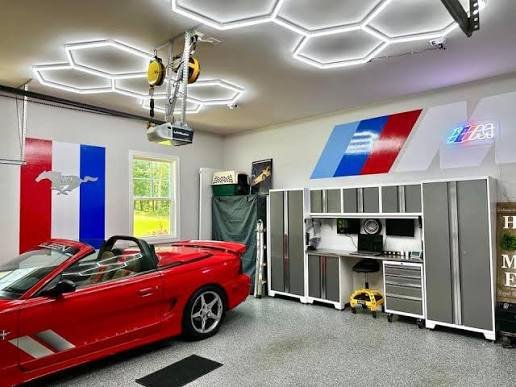
A garage used for exercise and household storage needs lighting that works around changing activities. The same floor area might hold a parked car, a folding bench or boxes waiting to go into the loft. Plan for those real arrangements before deciding where fittings belong.
Start by drawing the space in its main configurations. Include the garage door, fixed storage and the positions where people stand, sit or lie down during exercise. A lighting layout that works when the room is empty may feel very different once the equipment is in use.
Keep the movement area clear overhead
Check the clearance needed for the actual equipment and activities. Raised arms, a treadmill or a wall-mounted pull-up bar change the space available beneath the ceiling. Do not place fittings where they could be struck during normal use.
Consider cable routes, control positions and the door mechanism at the same time. Lighting should form part of the room plan rather than occupy the space left over after equipment is installed.
For equipment that may move, mark a realistic operating area. This helps the installer avoid positions that only work while everything stays in one exact arrangement. Keep access to switches and electrical equipment clear of storage.
Compare Garage Lighting from floor level
When choosing Garage Lighting, assess the view you will have during exercise. LightHub Direct’s collection offers different types of fittings, allowing the format to be considered alongside the room layout.
Ceiling lights that look comfortable while standing can shine directly into your eyes when you lie on a mat or bench. Check those sightlines before fixing the positions. A different location or light distribution may be more useful than simply reducing the output.
Garage lighting should also provide useful visibility around equipment and stored items. Avoid making the whole room dim to solve glare in one exercise position. Address the location of the bright source and its relationship to the activity.
Treat mirrors as part of the lighting layout
A large mirror can show a ceiling fitting that is outside your direct view. It can also reflect light towards equipment or an adjoining doorway. Consider the reflected image from the positions where the mirror will be used.
Test proposed garage lighting positions against the mirror location. This is easier before the mirror is fixed and the final cable routes are agreed. A small adjustment to either element can change the reflected glare.
Do not assume the mirror will make all areas sufficiently bright. Tall equipment or storage can still interrupt the light. Assess the surfaces and routes that need illumination rather than judging only the overall impression of brightness.
Separate quick visits from longer sessions
The lighting needed to collect a toolbox is different from the lighting used during a workout. Independent groups can let you illuminate the storage area briefly without operating the whole room.
If considering sensors, describe the activities to the installer. A person stretching or resting between sets may move very little. The system should not interpret that as an empty garage and leave the area unexpectedly dark.
Garage lighting controls need to be easy to use when entering with equipment or laundry. Consider a suitable manual option and agree how automatic controls will behave. Confirm the practical arrangements before choosing the sensor-equipped product version.
Check the building conditions before the product finish
An attached, insulated garage may have different conditions from a separate unheated building. Condensation, dust and temperature can affect product selection. Have any damp or electrical problems assessed instead of expecting a more robust fitting to solve them.
Read the manufacturer’s suitability information for the exact garage lighting model. Protection against ingress is one property, while operating temperature and installation requirements are separate checks. The electrician should assess the whole location, including connections.
If the space is being formally converted or its use substantially changed, obtain the advice required for that project. Lighting is one element of the wider building and electrical work. Avoid finalising a purchase while the ceiling and room layout are still uncertain.
Try the finished space in each arrangement
Once installed, use the garage as intended. Open the door, put the storage boxes back and set out the exercise equipment. Check the entrance route as well as the exercise positions.
Ask for garage lighting controls to be adjusted where the installed products allow it. Keep a record of the chosen settings and the product references. This is useful when adding equipment or changing the storage later.
Reassess the lighting if the room’s main use changes. Moving a bench beneath a fitting or adding tall shelves can alter glare and shadows. A shared garage works best when the lighting plan is reviewed alongside those ordinary changes.