


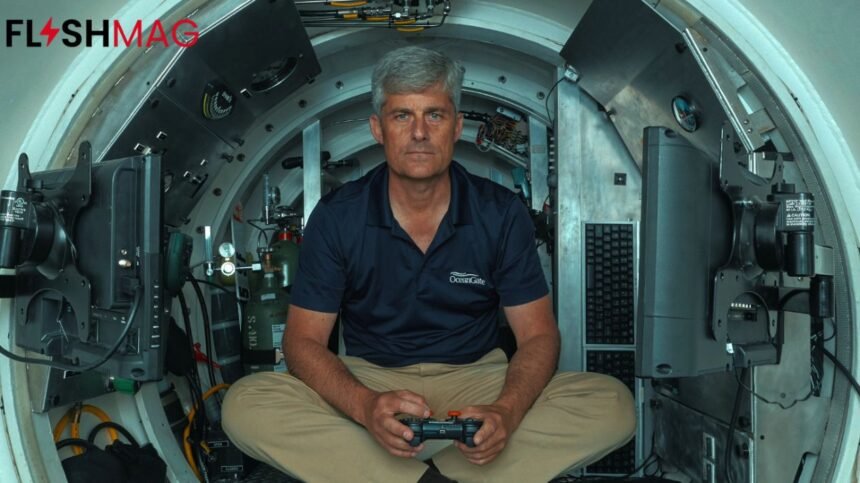
Few names in the world of deep-sea exploration have attracted as much attention in recent years as Stockton Rush. For many people, curiosity about his life began after headlines surrounding the Titan submersible captured global interest. Yet beyond the news stories and public discussions, there is another question that continues to spark attention: what was Stockton Rush’s financial success, and how did he build it?
- Who Was Stockton Rush?
- Stockton Rush Net Worth and Financial Success
- Early Career and Professional Foundations
- The Creation of OceanGate
- The Appeal of Deep-Sea Exploration
- Leadership Style and Vision
- Business Challenges Along the Way
- Public Attention and Global Recognition
- Legacy Beyond Financial Figures
- Lessons Entrepreneurs Can Learn
- Why People Remain Interested in His Story
- The Relationship Between Wealth and Legacy
- Conclusion
- FAQs
The topic of Stockton Rush Net Worth is about much more than numbers. It offers a glimpse into the life of an entrepreneur, engineer, and explorer who dedicated much of his career to pushing technological boundaries. His journey combined innovation, risk-taking, and a fascination with the unknown depths of the ocean.
Understanding his financial standing also means understanding the businesses he built, the opportunities he pursued, and the legacy he left behind. While exact figures remain difficult to verify publicly, his career provides valuable insights into how passion and entrepreneurship can intersect in unusual ways.
Bio
| Detail | Information |
|---|---|
| Full Name | Richard Stockton Rush III |
| Known As | Stockton Rush |
| Date of Birth | March 31, 1962 |
| Place of Birth | San Francisco |
| Date of Death | June 18, 2023 |
| Age at Death | 61 Years |
| Nationality | American |
| Profession | Businessman, Engineer, Entrepreneur, Explorer |
| Famous For | Co-founder and CEO of OceanGate |
| Education | B.S.E. in Aerospace Engineering from Princeton University; MBA from University of California, Berkeley |
| Early Career | Flight Test Engineer at McDonnell Douglas |
| Company Founded | OceanGate (2009) |
| Spouse | Wendy Weil |
| Children | 2 |
| Known Interests | Aviation, Scuba Diving, Ocean Exploration |
| Net Worth (Estimated) | Approximately $20–25 million (various public estimates, not officially confirmed) |
| Notable Achievement | Developed and promoted private deep-sea exploration missions |
| Last Expedition | Titan submersible expedition to the Titanic wreck |
| Legacy | Pioneer of commercial deep-sea tourism and underwater exploration technology |
Who Was Stockton Rush?
Stockton Rush was an American businessman, engineer, and explorer best known as the founder and chief executive of OceanGate, a company focused on deep-sea exploration and submersible technology.
Born into a family with a history of achievement and leadership, Rush displayed an interest in engineering and aviation from an early age. He reportedly became one of the youngest jet transport-rated pilots in the United States during his youth, demonstrating both ambition and technical talent.
His educational background further supported his interests. He studied engineering and later applied his knowledge to various business ventures before eventually entering the field of ocean exploration.
What made Rush stand out was his willingness to pursue projects that many considered too difficult, expensive, or risky. Whether one agrees with his methods or not, there is little doubt that he approached innovation with remarkable determination.
Stockton Rush Net Worth and Financial Success
When discussing Stockton Rush Net Worth, it is important to note that publicly available estimates vary significantly. Unlike publicly traded company executives whose finances may be easier to track, private business owners often have wealth that is difficult to measure accurately.
Various reports and estimates have suggested that his net worth ranged from several million dollars to tens of millions. However, no official figure has been universally confirmed.
A significant portion of his financial standing likely stemmed from his leadership role at OceanGate and his involvement in advanced technology ventures. His wealth was not necessarily built through traditional industries but through specialized engineering projects and exploration-related businesses.
In many ways, his financial story reflects the reality of entrepreneurship. Wealth in innovative industries is often tied to company value, investments, intellectual property, and future growth potential rather than simple cash holdings.

Early Career and Professional Foundations
Before becoming known for ocean exploration, Stockton Rush built experience in several technical and business fields.
Engineering Background
Engineering remained a central theme throughout his career. His academic training helped him understand complex systems and provided the foundation needed to develop advanced technological projects.
This technical expertise became especially important when designing and managing deep-sea exploration programs.
Aviation Interests
Rush’s passion for aviation played an important role in shaping his mindset. Flying requires precision, confidence, and an understanding of sophisticated technology.
Many observers have noted similarities between aviation and deep-sea exploration. Both involve environments where safety, engineering, and decision-making are critically important.
Entrepreneurial Ventures
Before OceanGate became widely recognized, Rush participated in various entrepreneurial efforts. These experiences helped him understand business operations, investment strategies, and leadership responsibilities.
Entrepreneurship is rarely a straight path. Success often comes through experimentation, setbacks, and adaptation. Rush’s professional journey appears to reflect that reality.
The Creation of OceanGate
One of the most significant milestones in Rush’s career was the founding of OceanGate.
The company was established with a mission to expand access to deep-ocean exploration. Traditionally, underwater expeditions have been limited by high costs and technical challenges. OceanGate sought to change that by developing innovative submersible technologies.
For Rush, the ocean represented one of the last great frontiers of discovery. While humanity has explored much of the Earth’s surface, vast portions of the deep ocean remain largely unknown.
This vision became a driving force behind the company’s projects.
A Unique Business Model
Unlike many technology companies focused on software or consumer products, OceanGate operated in a highly specialized niche.
The company offered research opportunities, exploration missions, educational initiatives, and private expeditions. This unique approach helped distinguish it from traditional marine organizations.
Building a business around ocean exploration was never likely to be easy. The costs were substantial, and the challenges were significant. Yet the company succeeded in attracting attention from researchers, explorers, and enthusiasts worldwide.
The Appeal of Deep-Sea Exploration
To understand Stockton Rush’s career, it helps to appreciate why deep-sea exploration remains so fascinating.
The ocean covers more than seventy percent of the Earth’s surface, yet much of it remains unexplored. New species, geological formations, and scientific discoveries continue to emerge from underwater research.
For people like Rush, this represented an extraordinary opportunity.
The Spirit of Discovery
Throughout history, explorers have been driven by curiosity.
Some crossed oceans. Others climbed mountains. Rush chose to focus on the depths beneath the sea.
There is something uniquely compelling about exploring places that few humans have ever seen. That sense of discovery became central to his public image and professional mission.
Technology as an Enabler
Modern exploration depends heavily on technology.
Advanced materials, navigation systems, communication equipment, and engineering innovations all play crucial roles in underwater missions.
Rush frequently emphasized the importance of innovation in making exploration more accessible and efficient.
Leadership Style and Vision
Entrepreneurs often leave their mark not only through products but also through their vision.
Rush was known for advocating ambitious goals and challenging conventional assumptions. He believed technological progress sometimes required questioning established methods.
Supporters viewed this approach as innovative and forward-thinking. Critics occasionally viewed it as overly aggressive.
Regardless of perspective, his leadership style generated attention and discussion.
Taking Calculated Risks
Every entrepreneur faces decisions involving risk.
Launching a new business, developing emerging technology, and entering unexplored markets all involve uncertainty.
Rush appeared comfortable operating in environments where outcomes were not guaranteed. This willingness to embrace uncertainty became a defining characteristic of his career.
Inspiring Interest in Exploration
Another aspect of his leadership involved public engagement.
By discussing ocean exploration in interviews and public appearances, he helped introduce broader audiences to topics that might otherwise remain within scientific communities.
That educational impact should not be overlooked.
Business Challenges Along the Way
No entrepreneurial journey is free from obstacles.
Ocean exploration presents challenges that are financial, technical, and operational. Developing specialized equipment requires substantial investment, rigorous testing, and continuous improvement.
For companies operating in this field, profitability can be difficult to achieve.
Funding Innovative Projects
One of the biggest challenges facing exploration companies is securing adequate funding.
Investors often prefer predictable industries with established revenue streams. Exploration ventures, by contrast, may involve long timelines and uncertain outcomes.
Rush spent much of his career balancing innovation with business realities.
Managing Public Expectations
As media attention increased, so did public scrutiny.
High-profile projects naturally attract interest, and expectations can become difficult to manage.
Navigating this environment requires both strategic communication and organizational resilience.
Public Attention and Global Recognition
For many years, Stockton Rush was primarily known within exploration and engineering circles.
That changed dramatically when global media began focusing on OceanGate and its underwater expeditions.
Suddenly, millions of people who had never heard his name became curious about his background, achievements, and business ventures.
This surge of attention led to increased interest in topics such as his career history, personal life, and financial standing.
As a result, searches related to Stockton Rush Net Worth became increasingly common online.
Legacy Beyond Financial Figures
While discussions about wealth often focus on numbers, a person’s legacy usually extends much further.
Rush’s influence can be seen in several areas.
Encouraging Innovation
His work encouraged conversations about how emerging technologies can expand human exploration.
Whether discussing ocean research, engineering design, or entrepreneurial ambition, innovation remained a recurring theme throughout his career.
Advancing Public Curiosity
One interesting aspect of his legacy is the way he brought attention to ocean exploration.
Many people who previously paid little attention to underwater research suddenly found themselves learning about submersibles, marine science, and deep-sea technology.
That increased awareness may inspire future explorers and researchers.
Challenging Traditional Boundaries
History often remembers individuals who attempted to push beyond accepted limits.
Rush undoubtedly fit that description. His career reflected a belief that progress often comes from attempting difficult and unconventional projects.
Lessons Entrepreneurs Can Learn
There are several lessons that business owners and aspiring entrepreneurs can take from Stockton Rush’s journey.
Passion Can Drive Opportunity
Rush clearly cared deeply about exploration.
That passion helped shape his business decisions and career direction.
Many successful entrepreneurs build companies around interests they genuinely enjoy rather than simply pursuing trends.
Innovation Requires Persistence
Groundbreaking ideas rarely succeed immediately.
Developing new technologies often involves years of effort, experimentation, and refinement.
Rush’s career demonstrates the persistence required to pursue ambitious goals.
Public Visibility Changes Everything
As businesses grow, public attention often follows.
Managing reputation, communication, and expectations becomes increasingly important.
This lesson applies across industries, not just exploration ventures.
Why People Remain Interested in His Story
The continued interest surrounding Stockton Rush stems from several factors.
First, there is the human element. People are naturally curious about individuals who pursue extraordinary ambitions.
Second, there is the business aspect. Entrepreneurs who build unique companies often attract attention because their paths differ from conventional success stories.
Finally, there is the exploration factor. Deep-sea missions tap into a sense of wonder that few other industries can match.
When these elements combine, public fascination tends to endure.
The Relationship Between Wealth and Legacy
Financial success is often viewed as a measure of achievement.
However, wealth alone rarely defines how someone is remembered.
For Stockton Rush, discussions about money are only one part of a much larger story.
His contributions to exploration, engineering, and entrepreneurial thinking arguably carry greater significance than any estimated net worth figure.
People may search for information about Stockton Rush Net Worth, but they often end up learning about innovation, ambition, and the pursuit of discovery.
That, perhaps, says something meaningful about the relationship between success and legacy.
Conclusion
The story of Stockton Rush is both fascinating and complex. As an entrepreneur, engineer, and explorer, he dedicated much of his life to expanding access to the deep ocean and challenging traditional approaches to exploration.
While estimates surrounding Stockton Rush Net Worth continue to attract attention, the financial aspect represents only one chapter of his broader journey. His career was defined by curiosity, technological ambition, and a willingness to pursue goals that many considered difficult or unconventional.
Whether viewed through the lens of business, engineering, or exploration, his story remains a compelling example of how passion can shape a career. In the end, the lasting impact of Stockton Rush may not be measured solely in dollars but in the conversations, innovations, and curiosity he inspired along the way.
FAQs
1. What was Stockton Rush’s net worth?
While exact figures were never publicly confirmed, various estimates suggested that Stockton Rush’s net worth was in the multimillion-dollar range, largely connected to his business ventures and OceanGate.
2. How did Stockton Rush make his money?
Stockton Rush earned wealth through entrepreneurship, engineering projects, investments, and his role as founder and CEO of OceanGate, a company focused on deep-sea exploration.
3. What was OceanGate?
OceanGate was a private company specializing in underwater exploration, submersible technology, and deep-sea expeditions for research and commercial purposes.
4. What was Stockton Rush known for?
He was best known as an engineer, entrepreneur, and explorer who sought to make deep-ocean exploration more accessible through innovative submersible technology.
5. Why is Stockton Rush still discussed today?
People remain interested in Stockton Rush because of his ambitious vision, his role in ocean exploration, and the global attention surrounding OceanGate and its underwater missions.\
You May Also Read: Doug Christie Chris Webber and the Story Behind Their On-Court Chemistry