


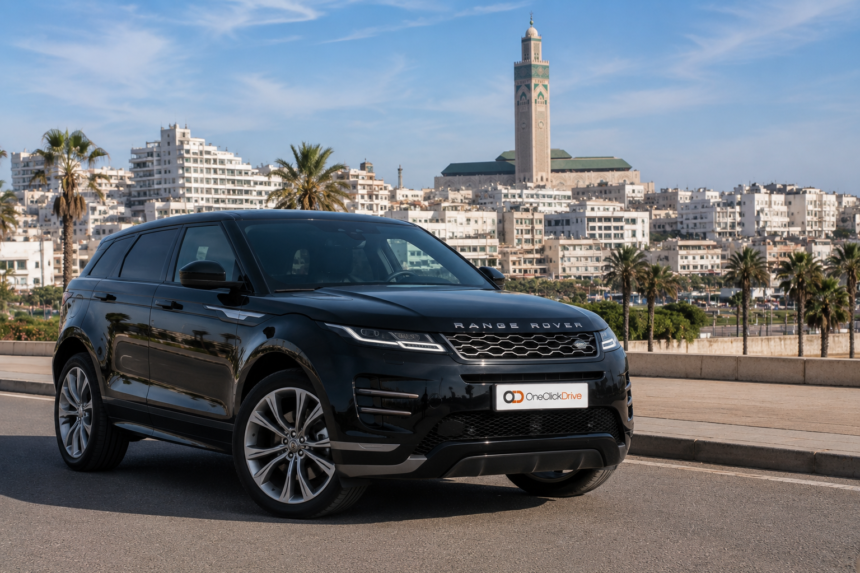
Most travellers flying into Morocco land at Marrakech and head straight for the medina. Casablanca, by contrast, tends to be treated as a stopover — a necessary connection on the way to somewhere more obviously picturesque. That reputation is both outdated and, for those who have actually spent time in the city, frankly baffling. Casablanca in 2026 is one of the most interesting cities in Africa: commercially dynamic, architecturally diverse, gastronomically underrated, and far more layered than the single image most people carry of it.
It is also, for travellers who want to use it as a base to explore Morocco more broadly, one of the best-connected cities on the continent. Which means that how you get around from Casablanca matters enormously, and getting it right changes the trip entirely.
The city that Morocco doesn’t bother to sell you
Casablanca has a marketing problem. It doesn’t have a single iconic image in the way that Marrakech has its souks or the desert has its dunes. It has instead a mosaic: the Hassan II Mosque rising from the Atlantic, its minaret the tallest religious structure in the world and its oceanside setting genuinely jaw-dropping at dawn or dusk. The Art Deco boulevards of the former French Protectorate quarter, which rival anything in Bordeaux or Tunis. The Corniche, where the city faces the ocean and the restaurants serve fish that arrived on the boats a few hours earlier.
The food scene is a particular revelation. Casablanca has the kind of restaurant culture that develops when a large, affluent, cosmopolitan population eats out regularly rather than performing for tourists. The mezze is outstanding. The seafood is extraordinary. And the coffee culture, driven by a young professional class that has travelled widely, has produced a café scene that would hold its own in any European city.
Then there is the practical advantage that rarely gets mentioned in travel writing: Casablanca is the commercial capital of Morocco, which means it has the infrastructure of a serious city. Getting a simcard, exchanging currency, finding a pharmacy, arranging a repair: all of these things are easier in Casablanca than almost anywhere else in the country. For travellers who are planning a longer Moroccan road trip, it makes an excellent organisational base.
Using Casablanca as a launch pad for Morocco
The geography of Morocco rewards a Casablanca-based itinerary in ways that aren’t immediately obvious from looking at a map. The motorway network radiates out from the city in all directions. Rabat, the capital, is forty-five minutes north. Marrakech is two and a half hours south. The Atlantic coast towns of El Jadida, Oualidia, and Essaouira are strung along a coastal road that takes you through some of the country’s most beautiful and least-visited territory. And for travellers willing to invest more time, the route east through the Middle Atlas to Fez and Meknès is one of the great road journeys in North Africa.
None of this is properly accessible without a car. The train gets you to Marrakech and Rabat on a fixed timetable. Everything else requires wheels and the freedom to stop when the landscape demands it.
For UK travellers looking to hire a vehicle that will actually do what they booked, OneClickDrive Morocco has built a verified network of over 1,000 local partner agencies across the country, with a model specifically designed to address the accountability gaps that have made car rental frustrating in Morocco for years. The vehicle listed is the vehicle delivered. A dedicated agent manages the booking throughout. The “or similar” substitution that plagues comparison site bookings is not part of how the platform operates.
What to actually do in Casablanca
Start with the Hassan II Mosque, but go early or at golden hour rather than midday. The light on the white marble and the view of the Atlantic from the terraces are worth the timing effort. The guided interior tour is genuinely impressive and gives access to spaces that are otherwise closed to non-Muslims.
The Habous quarter, built during the French Protectorate as a planned medina, is Casablanca’s most walkable shopping district. The pastry shops are exceptional and the atmosphere is considerably less frenetic than Marrakech’s old town. From there, the Villa des Arts — a beautifully restored French-era mansion now serving as a contemporary art space — is worth an hour of anyone’s time.
The Corniche runs along the Atlantic coast west of the city centre and is where Casablanca residents actually spend their leisure time. The seafood restaurants along this stretch are where you eat lunch on day two, once you’ve found your bearings. The La Sqala restaurant, inside a restored Portuguese fortification, serves traditional Moroccan food in a courtyard setting that is one of the most genuinely pleasant dining environments in the country.
For the day trips: the Roman ruins at Volubilis are a four-hour round trip from Casablanca via Meknès and are among the best-preserved Roman sites anywhere in the world. The coastal town of Oualidia, two hours south, has a lagoon beloved by Moroccan weekenders and exceptional oysters at prices that feel implausible by UK standards.
Practical details worth knowing
Mohammed V International Airport is Morocco’s largest and is well served from the UK, with direct routes from London Heathrow, Gatwick, Stansted, Manchester, and Birmingham. The train into the city centre takes around forty-five minutes and runs frequently. A UK driving licence is accepted without an international driving permit.
For travellers planning to collect a hire car in the city, the selection available through the car rental in Casablanca section of the OneClickDrive platform covers economy vehicles for urban driving through to SUVs for those heading immediately south toward Marrakech or east toward Fez. Booking in advance, particularly for SUVs, is advisable during spring and autumn when demand from European visitors peaks.
The currency is the Moroccan Dirham, which cannot be purchased before you arrive. ATMs at the airport and in the city centre dispense Dirhams without issue on UK debit and credit cards, though checking your bank’s foreign transaction fees before travelling is worth the two minutes it takes.
Why Casablanca rewards the open-minded traveller
The travellers who enjoy Casablanca most are those who arrive without the expectation that it will feel like Marrakech. It doesn’t. It’s a working city that happens to contain some of the most interesting architecture, food, and cultural energy in the region. It has beaches and an ocean-facing promenade and a coffee shop culture and a contemporary art scene. It also has an airport that connects it to the UK in under four hours and a motorway network that makes the rest of Morocco accessible in ways that no other city in the country can match.
It rewards the open-minded and it punishes preconceptions. Which, if you think about it, describes almost every destination that actually ends up mattering to the people who visit it.