


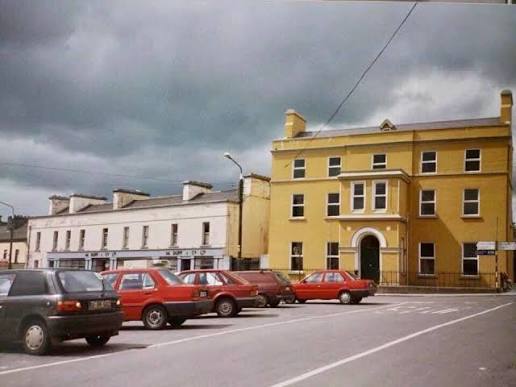
Gerard Quinlan is not interested in the Dublin of tourism brochures. His poetry collection Spin the Wheel Spin (Four O’clock Buzz): Weeds Between the Cobbles turns instead to Dominick Street and Dorset Street, to sorting rooms and gallery afternoons, to the quiet drama of people going about their ordinary lives without knowing they are extraordinary.
This is a collection that demands attention not because it shouts, but because it whispers. Quinlan has mastered the art of the understated revelation, the poem that appears to be about a mundane incident but slowly reveals a depth of feeling that takes your breath away. It is a skill that is more difficult to achieve than it sounds, and one that Quinlan deploys with consistent confidence.
The Art of Noticing
The poems in this collection are fundamentally about attention. Quinlan notices what others walk past. He sees the dust particles floating through gallery light and calls them fireflies. He sees the angry cyclist and reads in that ordinary burst of urban frustration an entire commentary on modern life. He sees the ploughed field under a North Dublin sky and finds something worth pausing for.
This quality of attention is infectious. Reading these poems changes the way you look at your own surroundings. After a few pages of Quinlan, you find yourself noticing the cracks in the pavement, the quality of the afternoon light, the expression on a stranger’s face at a bus stop. Poetry at its best changes perception, and this collection absolutely achieves that.
The title poem of the collection is a masterclass in this kind of sustained attention. The four o’clock buzz of the city, the specific quality of that late afternoon hour, becomes the lens through which an entire urban life is examined. It is a deceptively simple premise that opens into something genuinely profound.
Memory as Architecture
Running beneath the surface observations is a strong current of memory. Quinlan is interested in how the past continues to shape the present, how old photographs carry emotional weight, how ageing relatives embody entire eras of history. These are not nostalgic poems in the lazy sense; they do not merely lament what has been lost.
Instead, Quinlan uses memory constructively, as a way of understanding the present. When he writes about cousins and changing fashions across the decades, he is really writing about how identity is formed through relationships over time. The personal becomes universal, and the universal becomes personal; a neat trick that only the best poets pull off.
The working-class Dublin of his poems is itself a kind of architecture made of memory. Streets that have been walked for generations, buildings that have seen entire lives lived within them, corners that carry the weight of decades of conversation and argument and laughter. Quinlan is the poet of that accumulated history.
Why This Collection Will Last
Good poetry endures because it captures something true about human experience in a form that resists the erosion of time. Gerard Quinlan‘s collection does this with remarkable consistency. The poems are specific enough to feel authentic and universal enough to resonate with anyone who has ever lived in a city, felt the weight of time, or searched for beauty in unlikely places.
The metaphor of weeds between cobbles is not accidental. Weeds are persistent, adaptable, and fundamentally alive. They grow where they are not expected, survive conditions that would kill more delicate plants, and insist on existing regardless of whether they are welcome. These qualities describe both Quinlan’s poems and the people they celebrate.
This is a collection to return to. Each reading will yield something new: a connection not previously noticed, an image that suddenly resonates more deeply, a line that seems to describe something in your own life with unsettling precision. It is, in the best possible sense, a book that grows on you.