


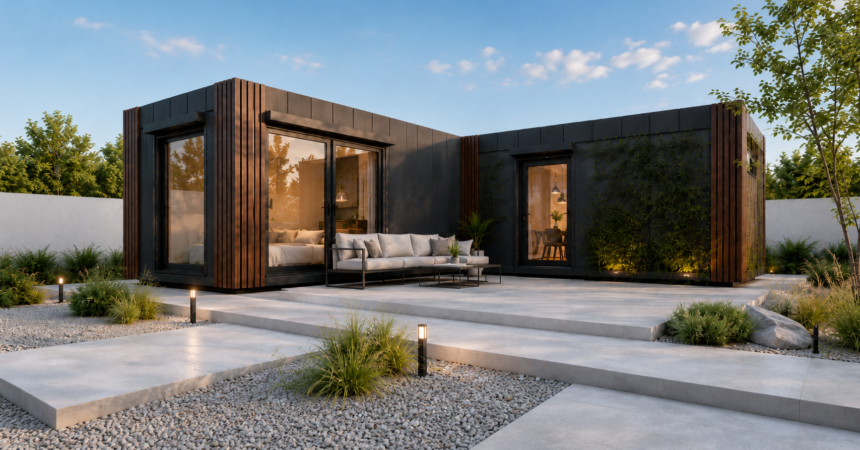
For many people in the UK, building a home still sounds like a long, stressful and unpredictable process. Delays, rising labour costs, design compromises and unclear budgets often turn an exciting idea into a difficult experience. That is exactly why modular house design is gaining so much attention among buyers who want more control, more clarity and a better result.
A custom-built home no longer has to mean years of uncertainty. With the right partner, a modular house can offer a smarter route from concept to completion, while still giving homeowners the freedom to create a space that feels personal, functional and future-ready. Even people who are only exploring the market, or advising friends and family, should understand why this approach is becoming such an important part of the UK housing conversation.
Why modular house design matters today
The UK housing market is changing. Buyers are more informed, land is more valuable, and expectations around energy performance, build quality and long-term value are much higher than they were a decade ago. In this environment, modular house design stands out because it combines design flexibility with a more controlled building process.
This is not about choosing a standard box and accepting the limitations. A well-planned modular house can be tailored around the plot, the lifestyle of the owner and the local planning context. That means the design can respond to everything from narrow urban sites to countryside settings, from family living to downsizing, from first homes to high-specification bespoke residences.
For buyers, that creates a very attractive proposition: a home designed around real needs, built with precision, and delivered through a process that is far easier to manage than many traditional projects.
What custom modular really means
Some people still assume modular construction limits creativity. In reality, the opposite is often true. A modern modular house design process begins with the same core question as any high-quality residential project: how should the home work for the people living in it?
That question shapes every decision, including:
- Layout and room flow.
- Size and number of bedrooms.
- Open-plan or more traditional living zones.
- Natural light and glazing strategy.
- Exterior style and material choices.
- Energy performance and comfort features.
- Accessibility, future-proofing and family flexibility.
A custom modular house can be designed for contemporary family life, remote working, multigenerational living or retirement planning. It can include vaulted ceilings, large kitchen-dining areas, utility zones, private bedroom wings, en-suite bathrooms and strong connections between indoor and outdoor space. In other words, buyers are not simply selecting a product. They are shaping a home around the way they want to live.
A more controlled path from idea to reality
One of the biggest strengths of modular house design is process control. Traditional builds often involve moving parts that are difficult for the buyer to oversee. Timelines shift, coordination becomes harder and cost certainty can weaken over time.
With a professionally managed modular house, much of the construction work is completed in a controlled production environment before the home reaches the site. That creates a more structured workflow, tighter quality control and a clearer programme. For clients, the result is not only practical but psychological: fewer unknowns, better visibility and more confidence at each stage.
A typical journey may include:
- Early consultation and brief development.
- Site review and feasibility assessment.
- Concept design and planning strategy.
- Technical development and specification.
- Production and site preparation.
- Installation, finishing works and handover.
This structure is especially valuable in the UK, where weather, labour availability and site constraints can affect conventional building projects. Buyers do not just want a beautiful outcome. They want a process they can trust.
Design freedom without unnecessary compromise
A strong modular house design strategy does more than speed up delivery. It helps buyers make better design decisions from the start. Because the system requires careful planning early in the process, the final home is often more coherent, more efficient and more aligned with the client’s priorities.
That matters for everyday living. A good home is not simply attractive in photographs. It should support routines, reduce wasted space and adapt over time. The best modular house projects are designed with this in mind, balancing aesthetics with practicality.
For example, a family may want:
- A kitchen at the centre of the home.
- Strong separation between quiet and social areas.
- Storage integrated into the layout rather than added later.
- Better thermal comfort and lower running costs.
- The option to expand or reconfigure in the future.
When handled properly, modular design can meet all of these goals while preserving visual quality and architectural character.
Where container homes fit into the conversation
In the UK, many buyers begin their research with container homes because the concept feels innovative, modern and efficient. It often attracts people who want an alternative to standard housing and are curious about faster or more flexible building methods.
That interest is useful, because it opens the door to a broader understanding of what custom modular construction can offer. In many cases, people who first look at container homes later realise that a fully bespoke modular house gives them more freedom in layout, appearance, insulation strategy, family comfort and overall long-term usability.
This is an important point for anyone comparing options. The real opportunity is not just to choose an alternative building method. It is to choose a better-fit solution. A tailored modular house design approach can deliver the individuality that attracts people to container homes, while also providing a wider design canvas and a more refined residential outcome.
Why UK buyers are paying closer attention
British buyers are increasingly focused on value, but value no longer means price alone. It means performance, durability, efficiency and confidence in the result. A home must work on day one and continue to work years later.
That is why modular house design appeals to such a wide audience:
- Self-builders who want a clearer route to their ideal home.
- Landowners looking to unlock the potential of a plot.
- Families who need a home shaped around specific lifestyle needs.
- Downsizers who want quality, comfort and easier maintenance.
- Investors and developers seeking a reliable, modern residential product.
Even those who are not planning to buy themselves may know someone who would benefit from this route. A relative looking to build on family land, a couple considering a fresh start outside the city, or a homeowner helping parents live more independently could all find real value in a custom modular house solution.
More than a trend
The strongest reason to take modular house design seriously is simple: it is not a passing trend. It reflects a bigger shift in how people think about homebuilding. Buyers want quality and individuality, but they also want transparency, efficiency and better decision-making.
A professionally designed modular house meets those expectations in a way that feels modern, practical and commercially sensible. It allows clients to move away from the idea that building a dream home must involve avoidable risk and compromise. Instead, it offers a route where creativity and control work together.
For companies operating in this space, the message is clear. The market is not only responding to speed. It is responding to confidence, customisation and a better customer experience from the very beginning.
For buyers, the opportunity is even more exciting. Whether they are actively planning a new home or simply exploring ideas to recommend to others, understanding modular house design today means being better prepared for the future of residential living in the UK.