

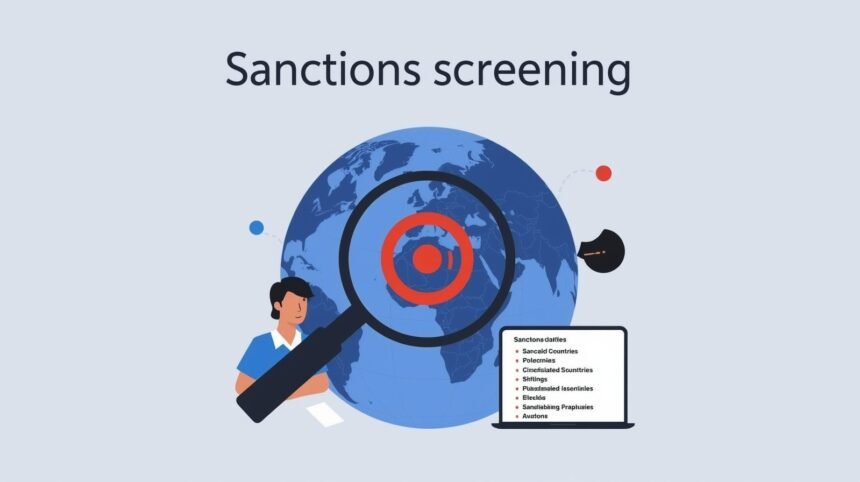
Organizations operating in regulated industries face increasing pressure to maintain strong compliance controls. One of the most critical components of a compliance program is Sanctions Screening, which helps businesses identify individuals, entities, and transactions linked to sanctioned parties. However, implementing a screening process is only the first step. Measuring its effectiveness is equally important to ensure compliance, reduce risk, and improve operational efficiency.
Key Performance Indicators (KPIs) provide measurable insights into how well a screening program performs. By tracking the right metrics, organizations can identify weaknesses, improve workflows, and strengthen their overall compliance framework.
Why Measuring Sanctions Screening Effectiveness Matters
A sanctions compliance program must do more than simply check names against watchlists. Regulators expect organizations to demonstrate that their controls are effective and capable of detecting potential risks. Ineffective screening processes can lead to missed matches, operational delays, regulatory penalties, and reputational damage.
With growing global restrictions and evolving regulations, businesses must also address risks associated with Secondary Sanctions, which can affect organizations indirectly connected to sanctioned entities. Measuring performance through KPIs helps compliance teams ensure their controls remain effective in a changing regulatory environment.
Essential KPIs for Sanctions Screening
The following KPIs are commonly used to evaluate the effectiveness of a screening program:
- Alert-to-True-Match Ratio
- False Positive Rate
- Average Alert Resolution Time
- Screening Coverage Rate
- Rescreening Accuracy and Frequency
These metrics provide valuable insights into both compliance effectiveness and operational efficiency.
Alert-to-True-Match Ratio
One of the most important indicators is the ratio of alerts generated compared to confirmed matches. A high volume of alerts with very few confirmed matches may indicate overly sensitive screening parameters.
Monitoring this KPI helps compliance teams balance risk detection with operational efficiency. Excessive alerts can overwhelm analysts and increase investigation costs, while insufficient alerts may result in missed risks.
False Positive Rate
False positives occur when legitimate customers or transactions are incorrectly flagged for review. While some false positives are unavoidable, an excessively high rate can slow business operations and consume valuable resources.
Tracking this metric helps organizations evaluate whether their screening rules, matching algorithms, and risk thresholds are appropriately configured. Continuous monitoring enables teams to refine their systems without compromising compliance objectives.
For organizations conducting AML Sanctions Screening, reducing false positives is particularly important because screening activities often involve large customer databases and transaction volumes.
Average Alert Resolution Time
The speed at which alerts are investigated and resolved is another key measure of effectiveness. Long investigation times can create operational bottlenecks and delay customer onboarding or transaction processing.
By measuring average resolution time, organizations can identify workflow inefficiencies, staffing challenges, or technology limitations. Faster resolution times often indicate a more streamlined and efficient compliance operation.
However, speed should never come at the expense of investigation quality. The goal is to maintain thorough reviews while minimizing unnecessary delays.
Screening Coverage Rate
A screening program is only effective if it covers all relevant customers, counterparties, transactions, and business relationships. Screening coverage measures the percentage of required records that are successfully screened against applicable sanctions lists.
This KPI helps organizations identify potential gaps in their compliance controls. Incomplete coverage may expose businesses to regulatory risks and increase the likelihood of overlooking sanctioned parties.
Coverage becomes especially important when screening against the OFAC Sanctions list, as regulatory expectations require organizations to maintain consistent and comprehensive controls.
Rescreening Accuracy and Frequency
Sanctions lists are updated regularly, making periodic rescreening an essential component of an effective compliance program. Measuring how often customers are rescreened and whether updates are processed accurately can help organizations maintain ongoing compliance.
A strong rescreening process ensures that newly designated individuals or entities are identified promptly. This is particularly important in sectors with high transaction volumes and international exposure.
Organizations that fail to maintain timely rescreening procedures may unknowingly conduct business with sanctioned parties, increasing both regulatory and operational risks.
Using KPI Data for Continuous Improvement
Collecting KPI data is only valuable when organizations use it to improve their screening programs. Compliance teams should review performance metrics regularly, identify trends, and implement corrective actions where necessary.
Technology also plays a significant role in performance optimization. Advanced screening solutions can provide analytics, automated reporting, and real-time monitoring capabilities that support data-driven decision-making.
Regular KPI reviews help organizations adapt to regulatory changes, improve efficiency, and strengthen risk management practices.
Conclusion
Measuring the effectiveness of Sanctions Screening requires more than a simple review of system activity. Organizations need meaningful KPIs that provide visibility into alert quality, investigation efficiency, coverage, and ongoing monitoring performance. By tracking metrics such as false positive rates, alert resolution times, and screening coverage, businesses can strengthen compliance controls and reduce exposure to sanctions-related risks.
As regulatory expectations continue to evolve and concerns surrounding Secondary Sanctions increase, organizations that consistently monitor and improve their AML Sanctions Screening programs will be better positioned to maintain compliance and protect their operations from financial and reputational harm.