


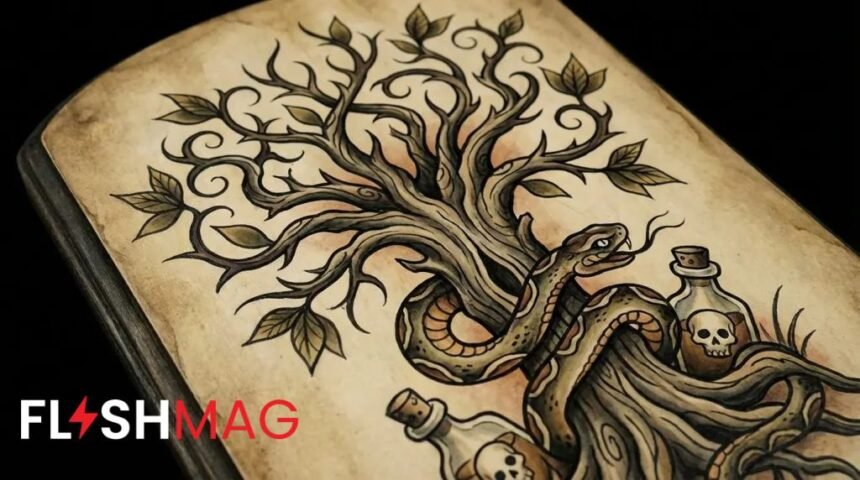
There’s something about tattoos that lean into darker symbolism—they tend to linger in your mind a little longer. A poison tree tattoo is one of those designs. At first glance, it might look like just another eerie or gothic piece. But if you pause for a moment, it starts to feel… heavier. More personal. Almost like it’s trying to say something you can’t quite put into words.
- The Roots of the Poison Tree Tattoo Meaning
- A Symbol of Hidden Emotions
- Growth Isn’t Always Positive
- The Dual Nature of the Design
- Personal Interpretation Matters
- Poison Tree Tattoo Meaning in Modern Context
- Common Design Elements and Their Subtle Meanings
- Why People Connect With This Symbol
- Is It a Negative Symbol?
- Placement and Its Subtle Influence
- A Design That Ages With You
- Final Thoughts
- FAQs
So what does it actually mean? Why would someone choose a symbol tied to something as unsettling as a “poison tree”? The answer isn’t as straightforward as you might think—and that’s exactly what makes it interesting.
The Roots of the Poison Tree Tattoo Meaning
The phrase “poison tree” doesn’t come out of nowhere. Its most well-known origin traces back to a poem by William Blake titled A Poison Tree. Even if you’ve never read it, chances are you’ve encountered its core idea: suppressed anger can grow into something destructive.
The poem tells a simple but powerful story. When anger is expressed openly, it fades. But when it’s hidden, nurtured, and left unresolved, it grows—like a tree bearing toxic fruit. That image alone is enough to spark a tattoo idea.
The poison tree tattoo meaning often draws directly from this concept. It represents emotions that are buried instead of released. Not just anger, but resentment, jealousy, even quiet bitterness. The kind of feelings that don’t explode outward—but instead settle in and take root.
A Symbol of Hidden Emotions
Not all tattoos are meant to be loud or obvious. Some are deeply internal, almost private. A poison tree tattoo tends to fall into that category.
It’s less about showing something off and more about acknowledging something within.
People who choose this design are often reflecting on emotions they’ve carried for a long time. Maybe it’s unresolved conflict. Maybe it’s something they never said out loud. The tree becomes a symbol of that silence—and what it can turn into over time.
There’s a subtle honesty in that. It’s not always comfortable, but it’s real.
Growth Isn’t Always Positive
We usually think of trees as symbols of life, growth, and stability. And that’s true… most of the time. But a poison tree flips that idea on its head.
It suggests that growth, in itself, isn’t automatically good.
If what’s being nurtured is negativity, then growth can actually lead to harm. That’s where the deeper poison tree tattoo meaning comes in. It’s a reminder that what we feed emotionally—whether consciously or not—will eventually shape us.
It’s a bit unsettling, honestly. But also kind of grounding.
The Dual Nature of the Design
One of the reasons this tattoo is so compelling is its duality. It’s both beautiful and dangerous. Strong yet fragile. Alive, but toxic.
That contrast makes it visually and symbolically rich.
Some designs lean into the darker side—twisted branches, decaying leaves, maybe even dripping fruit that looks almost venomous. Others keep the tree more natural, letting the meaning come through in subtle ways.
Either way, there’s always that underlying tension: something that looks like it should be good… but isn’t.
Personal Interpretation Matters
Here’s the thing—no tattoo has a single fixed meaning. The poison tree tattoo meaning can shift depending on the person wearing it.
For some, it’s about regret. A reminder of a time when they held onto anger for too long.
For others, it’s more about awareness. Almost like a personal warning: don’t let things fester. Speak up. Let go.
And sometimes, it’s not about the past at all. It’s about what’s happening right now. A way of saying, “I know this feeling, and I’m working through it.”
That flexibility is part of what makes the design so appealing. It adapts.
Poison Tree Tattoo Meaning in Modern Context
In today’s world, emotional awareness is talked about more openly than ever. Therapy, mental health, self-reflection—it’s all part of everyday conversation now.
And yet, people still struggle to express certain emotions.
That’s where symbolic tattoos come in. A poison tree can act as a kind of emotional shorthand. You don’t have to explain everything. The symbol carries the weight for you.
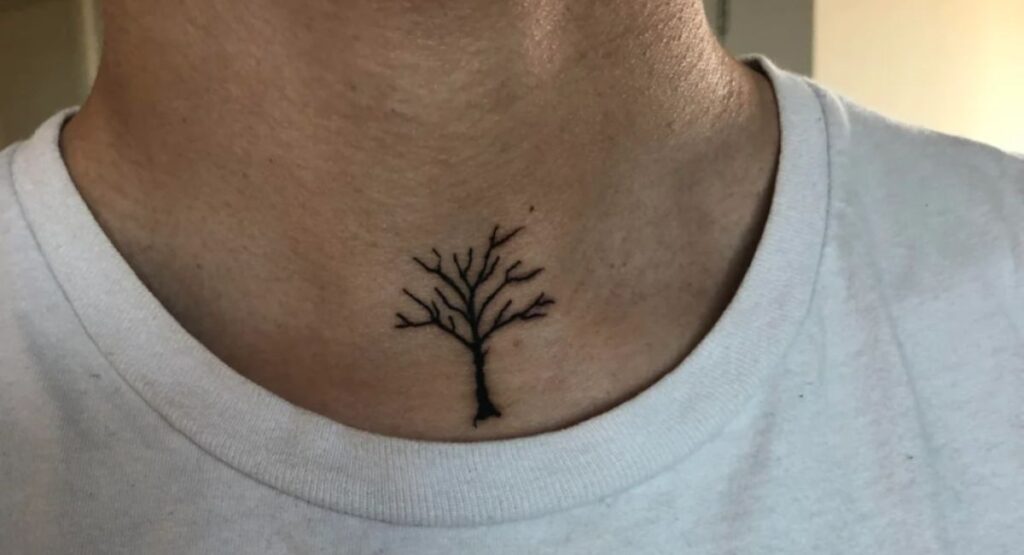
Interestingly, the poison tree tattoo meaning has evolved slightly over time. While it still connects to suppressed anger, it’s also become tied to personal growth and healing.
Not in a cheerful, “everything’s fine” kind of way—but in a more honest, messy sense. Growth that acknowledges the darker parts instead of ignoring them.
Common Design Elements and Their Subtle Meanings
Twisted or Gnarled Branches
These often represent inner turmoil or emotional conflict. The more chaotic the branches, the more complex the underlying feelings might be.
Dark or Wilted Leaves
Leaves that appear damaged or dying can symbolize emotional exhaustion, regret, or the consequences of holding onto negativity.
Poisonous Fruit
This is one of the most direct references to Blake’s poem. The fruit represents the outcome—the visible result of hidden emotions. It’s what happens when something toxic is allowed to grow unchecked.
Roots
Roots are always interesting in tattoo symbolism. In this case, they often point to the origin of the emotion. Deep, buried, and sometimes hard to trace.
Why People Connect With This Symbol
Let’s be honest—everyone has experienced some version of bottled-up emotion. It’s part of being human.
But not everyone feels comfortable expressing it.
A poison tree tattoo can be a way of confronting that reality without having to explain it out loud. It’s quiet, but it says a lot.
There’s also something oddly comforting about acknowledging darker emotions. Not celebrating them, exactly—but recognizing that they exist and that they matter.
It makes the experience feel less isolating.
Is It a Negative Symbol?
This is where things get a little nuanced.
At first glance, the poison tree tattoo meaning seems pretty negative. It’s tied to anger, toxicity, and emotional suppression. Not exactly uplifting themes.
But if you look closer, there’s another layer.
It can also be a symbol of awareness. Of learning. Of choosing not to repeat the same patterns.
In that sense, it’s not just about the poison—it’s about recognizing it.
And maybe even doing something about it.
Placement and Its Subtle Influence
Where the tattoo is placed can slightly shift its tone.
A poison tree on the forearm might feel more outward-facing, almost like a statement. Something you’re willing to share or at least not hide.
On the back or chest, it becomes more private. More introspective. Like it’s meant for you rather than the world.
Placement doesn’t change the core poison tree tattoo meaning, but it can influence how it’s experienced—both by the wearer and by others.
A Design That Ages With You
Some tattoos lose their relevance over time. Trends change, meanings fade, and what once felt important starts to feel… less so.
The poison tree is different.
Because it’s tied to emotion and self-awareness, it tends to evolve alongside the person. What it means at 20 might not be exactly what it means at 40—but it still resonates.
In a way, it grows. Just like the symbol itself.
Final Thoughts
The poison tree tattoo meaning isn’t simple, and that’s probably why it sticks with people. It’s layered, a little uncomfortable, and deeply human.
It speaks to the parts of ourselves we don’t always show—the emotions we hold back, the thoughts we let linger, the things we wish we’d handled differently.
But it’s not just about darkness. There’s a quiet kind of clarity in it too. A recognition that emotions, even the difficult ones, shape who we are.
And maybe that’s the real point.
Not to avoid the poison entirely—but to understand it before it takes root.
FAQs
What does a poison tree tattoo symbolize?
A poison tree tattoo usually represents hidden or suppressed emotions, especially anger or resentment. It reflects the idea that when feelings are not expressed, they can grow into something harmful over time.
Is a poison tree tattoo always negative?
Not necessarily. While it carries darker themes, it can also symbolize awareness and personal growth. For many people, it’s more about recognizing emotional patterns than celebrating negativity.
Where does the poison tree meaning come from?
The meaning is largely inspired by William Blake’s poem A Poison Tree, which explores how unspoken anger can develop into something destructive if left unresolved.
Who should get a poison tree tattoo?
Anyone who connects with its symbolism can choose it. It often appeals to people who value introspection, emotional depth, or want a reminder to process their feelings honestly.
Can the design of a poison tree tattoo change its meaning?
Yes, small design choices can shift the tone. For example, darker elements like twisted branches or decaying fruit may emphasize negativity, while simpler designs might focus more on reflection and personal meaning.
You May Also Read: Seargeoh Stallone Now: Living Beyond Hollywood Fame